Each year the Andreas Gruentzig Lecture and the Josef Roesch Lecture are given by scientists whose contributions to IR, the development of interventional radiology, and CIRSE are widely recognized.
Honorary lectures
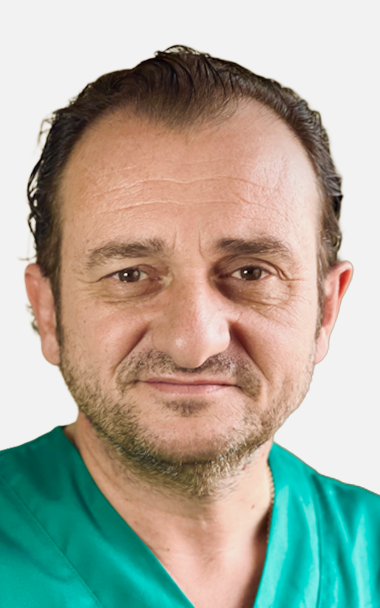
Andreas Gruentzig Lecturer 2026 | Prof. Vincent Vidal
Honouring the late German radiology legend Andreas Gruentzig, this eponymous lecture has been given by some of IR’s most outstanding representatives upon the invitation from the CIRSE Executive Committee.
Andreas Gruentzig Lecture
From emerging countries to space missions: building interventional radiology where it does not yet exist
To be delivered at the CIRSE 2026 Opening and Awards Ceremony
Andreas Gruentzig Lecture
Breaking barriers in breast cancer: Cryoablation as the ultimate expression of IO’s de-escalation philosophy
Andreas Gruentzig Lecture
Breaking barriers in breast cancer: Cryoablation as the ultimate expression of IO’s de-escalation philosophy
Andreas Gruentzig Lecture
Breaking barriers in breast cancer: Cryoablation as the ultimate expression of IO’s de-escalation philosophy
Professor Vincent Vidal is Head of Interventional Radiology at Timone University Hospital in Marseille, France, and Professor of Radiology at the Faculty of Medicine of Aix-Marseille University. He also serves as Director of the Experimental Interventional Imaging Laboratory (LIIE), a translational research unit dedicated to image-guided therapies and innovative endovascular technologies.
Professor Vidal earned both his M.D. and Ph.D. from Aix-Marseille University. Early in his career, he developed a strong international academic foundation through research and clinical fellowships in Canada, including a research fellowship at the University of Toronto and combined clinical and research fellowships at the University of Montreal (2003–2004). These formative experiences shaped his long-term commitment to innovation, academic collaboration, and the global development of interventional radiology.
His clinical and research activities focus primarily on embolization, with particular interest in developing safer, more accessible, and biologically compatible embolic materials. Over the past decade, he has introduced three innovative concepts that reflect this vision.
The first, Emborrhoid, is a minimally invasive technique involving embolization of the superior rectal arteries for the treatment of hemorrhoidal disease. This approach has contributed to expanding the therapeutic spectrum of endovascular management in benign pathology and has gained international recognition.
The second concept, FairEmbo, explores embolization using permanent and absorbable sutures as low-cost embolic agents. Designed to address disparities in access to interventional radiology, FairEmbo represents an effort to adapt advanced techniques to resource-limited settings while maintaining safety and efficacy standards.
The third innovation, Embobio, introduces organic embolization using a novel agar-agar–based embolic agent. This research reflects Professor Vidal’s broader interest in biologically derived and environmentally responsible medical technologies, aiming to improve biocompatibility while reducing the ecological footprint of implantable devices.
Beyond technological innovation, Professor Vidal is deeply engaged in structuring and strengthening interventional radiology at both national and international levels. He serves as President of the Fédération de Radiologie Interventionnelle (FRI) within the French Society of Radiology (SFR), where he actively contributes to the organization, recognition, and strategic development of interventional radiology in France.
Internationally, he leads the FairEmbo team, dedicated to advancing interventional radiology in emerging countries across Western and Central Africa through sustainable training models and institutional partnerships.
He is also the initiator of IRIS (International Radiology in Space), a multidisciplinary initiative exploring the adaptation of interventional radiology techniques for autonomous care during long-duration space missions. IRIS aims to prepare medical technologies for lunar missions, serving as test platforms for future interplanetary missions, including Mars. Importantly, these innovations are designed not only for space exploration but also for translation back to Earth, where they may benefit isolated territories and medically underserved regions requiring autonomous and minimally invasive care.
Professor Vidal is an active member of major international societies, including the Society of Interventional Radiology (SIR), the Cardiovascular and Interventional Radiological Society of Europe (CIRSE), and the European Society of Radiology (ESR). Through his clinical practice, research leadership, and institutional and international initiatives, he promotes a vision of interventional radiology that is innovative, structured, globally accessible, and future-oriented.

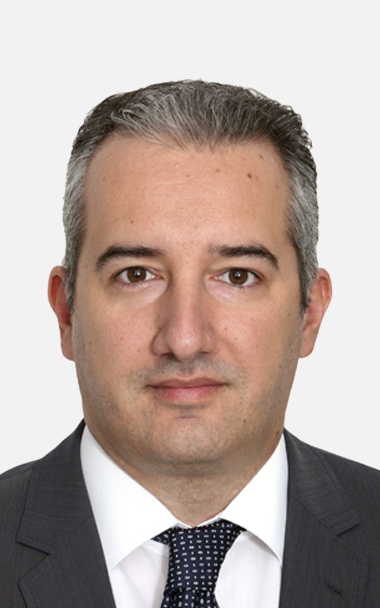
Josef Roesch Lecturer 2026 | Prof. Dimitrios Filippiadis
Since its introduction in 2003, the Josef Roesch Lecture has been given by a number of prominent interventional radiologists who have taken this opportunity to reflect on the statues of interventional radiology and its various treatments.
Josef Roesch Lecture
Redefining the landscape of pain management: interventional radiology as a strategic clinical leader
To be delivered at the CIRSE 2026 Opening and Awards Ceremony
Josef Roesch Lecture
The unlikely journey into MSK embolization and the forces that drove it
Josef Roesch Lecture
The unlikely journey into MSK embolization and the forces that drove it
Josef Roesch Lecture
The unlikely journey into MSK embolization and the forces that drove it
Prof. Dimitrios Filippiadis serves as Professor of Diagnostic and Interventional Radiology at the Medical School of National and Kapodistrian University of Athens. His practice at the IASIOS-accredited 2nd Department of Radiology in ATTIKON University Hospital centers around pain management, interventional oncology (IO), and musculoskeletal (MSK) interventions. His career bridges clinical practice, academic scholarship, and professional service.
Born in 1975, Prof. Filippiadis pursued his medical education and specialized radiology training with a clear inclination toward Interventional Radiology procedures at an early stage. He received his degree in Medicine in 1998 from Charles University in Prague, Czechia. During his radiology training, which he successfully completed in 2009, Prof. Filippiadis was awarded grants from the Cardiovascular and Interventional Radiological Society of Europe (CIRSE). These grants enabled him, early in his career, to broaden his clinical exposure through visiting fellowships at the University of Strasbourg in France and the University of Bonn in Germany. These formative international experiences significantly enriched his technical expertise in image-guided therapies, exposed him to diverse procedural approaches and institutional practices, and helped cultivate a global perspective that would later shape his academic, clinical, and collaborative work within the global Interventional Radiology community.
Prof. Filippiadis’ involvement with CIRSE began with the Database Organization, the predecessor of what has since evolved into the CIRSE Library. Ever since, he has served in many capacities and roles in the Standards of Practice Committee, the Membership Committee, and the Scientific Program Committees of the Annual Congress, ECIO, and ICCIR as well as in the Editorial Board of CVIR. Currently, Prof. Filippiadis serves as Deputy Editor-in-Chief to the CVIR Editorial Board. A dedicated educator, Prof. Filippiadis has also served as Chairperson of the Online Education Committee of CIRSE. In this capacity, he worked closely with dedicated colleagues, driving efforts to expand virtual education, enhance the CIRSE Library, Webinars, and Academy resources, to create truly global platforms of learning and exchange. and promote lifelong learning across the global interventional radiology community. His contribution to education reflects a long-standing belief that cultivating knowledge and skills in younger generations of interventional radiologists (younger generations of clinicians) is essential for the continued advancement of the specialty.
Most recently, Prof. Filippiadis assumed the role of Deputy Chairperson at the launch of the European Conference on Image-guided Pain Management (ECIP), an initiative developed under the auspices of CIRSE. The creation of ECIP marks an important milestone in the formal recognition of image-guided pain therapies as a rapidly evolving and distinct pillar within interventional radiology. By promoting evidence-based practice, technical refinement, and collaborative research, ECIP aims to standardize and elevate the quality of minimally invasive pain interventions across Europe and beyond.
Profoundly committed to research and innovation, Prof. Filippiadis has published studies in peer-reviewed journals and books. His work spans multiple domains of interventional radiology — from pain management and ablation techniques to advanced image-guided therapies for cancer and musculoskeletal conditions. These contributions have also influenced clinical practice standards globally with papers he has co-authored being mentioned in NCCN guidelines for management of adult cancer pain. His work has resulted in over 200 scientific publications, hundreds of scientific and business presentations, 35 book chapters, and substantial industrial grant support. He is a CIRSE Fellow and the recipient of more than 20 major honors/awards.
Outside his demanding clinical and academic responsibilities, Prof. Filippiadis values balance, mentorship, and meaningful collaboration, qualities that continue to shape both his professional and personal outlook.