

September 5-9 | Copenhagen, Denmark

September 5-9 | Copenhagen, Denmark
September 5-9 | Copenhagen, Denmark
September 5-9 | Copenhagen, Denmark
September 5-9 | Copenhagen, Denmark
Gold Medallists
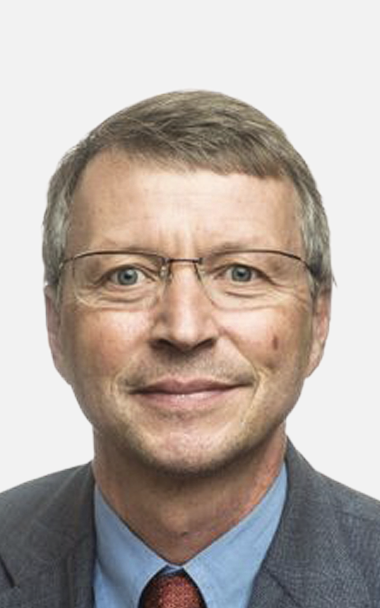
Prof. Klaus Hausegger
will be awarded at
the CIRSE 2026 Opening and Awards Ceremony on September 5, 14:30-16:00
Prof. Klaus Hausegger
will be awarded at
the CIRSE 2026 Opening and Awards Ceremony
Prof. Klaus Hausegger
will be awarded at
the CIRSE 2026 Opening and Awards Ceremony
Prof. Klaus Hausegger
will be awarded at
the CIRSE 2026 Opening and Awards Ceremony
Prof. Klaus Hausegger was born into a medical family, strongly influenced by his father, who was a radiologist. After completing medical school and an internship at the Medical University of Graz, he initially intended to pursue a career in surgery. When no surgical positions were available, he began a radiology residency instead – an unexpected turn of events that ultimately shaped and strengthened his professional path.
During his residency in Graz, interventional radiology was rapidly evolving, and Prof. Hausegger benefited greatly from early exposure to a wide range of interventional procedures. Under the mentorship of Prof. Johannes Lammer, he developed a deep interest in the field. He completed his radiology training and qualified as a full radiologist in 1991. That same year, he attended his first CIRSE Annual Meeting in Oslo, became a member of the society, and has not missed a single annual meeting since.
Following his residency, he continued at the University of Graz in a fellowship position as a full-time interventional radiologist. TIPS quickly became a particular area of interest and the focus of his habilitation, which he completed in 1994. His dedication to TIPS, supported by Prof. Lammer, enabled him to establish a close academic connection with Prof. Josef Rösch, known as the “Father of TIPS.” After several shorter visits to the Dotter Institute in Portland, Prof. Hausegger spent three months at the Charles Dotter Institute of Oregon Health Science University in the summer of 1995.
As interventional radiology expanded, complex aortic interventions gained increasing importance. His growing interest in aortic dissections led him to take a summer sabbatical in 1997 as a visiting fellow at Stanford University, where Prof. Mike Dake was pioneering major advances in aortic intervention techniques.
After Prof. Lammer left Graz for Vienna’s AKH, Prof. Hausegger assumed leadership of the interventional section and cross-sectional imaging (excluding MRI) after his habilitation. In 1994, he became an assistant professor. While his connections in the United States supported his professional development, CIRSE played a central role in building lasting international collaborations. One of the most influential relationships was with Prof. Krassi Ivancev from Malmö, whose expertise greatly contributed to the development of aortic stent grafting in Graz.
Also in 1994, Prof. Hausegger was appointed Deputy Chairman of the Radiology Department at the University Hospital Graz. The interventional service was extremely active, performing a high volume of innovative procedures. As with any advanced interventional program, complications occasionally occurred, and these experiences – both the successes and the difficult outcomes – motivated him to initiate the first International Congress on Complications in Interventional Radiology (ICCIR). The inaugural meeting was held in 1998 in Graz and was highly successful. Today, ICCIR is organised by CIRSE and continues to take place every two years.
In 2002, Prof. Hausegger was appointed Head of the Department of Diagnostic and Interventional Radiology in Klagenfurt, Austria. One of his major challenges there was the establishment of a neurointerventional service in a region where none had previously existed. With a dedicated team and strong international support, the service was successfully implemented within three years, performing the first stroke thrombectomy in 2005. Today, the interventional unit in Klagenfurt is well established and internationally recognised as a training centre for interventional radiology, including neurointerventions. The department has welcomed many national and international visiting fellows, frequently supported by the CIRSE Fellowship Programme.
Prof. Hausegger has long been committed to advancing CIRSE. Since joining the society in 1991, he has served in multiple capacities, including Chairperson of the European Board of Interventional Radiology (EBIR) and Editor‑in‑Chief of Cardiovascular and Interventional Radiology (CVIR) from September 2017 to 2025. His eight-year tenure as Editor‑in‑Chief was demanding and highly rewarding; together with an outstanding editorial team, he helped strengthen CVIR’s position as a leading journal in the field of interventional radiology.
Outside his professional activities, Prof. Hausegger is an avid sports enthusiast. He enjoys running, mountain climbing, ski touring, and cycling – pursuits that have helped him maintain good physical health throughout his career, including long days in the angiosuite and the demanding schedule of his editorial work. Cycling in the mountains together with his sons, Klaus and Michael, and his wife, Barbara, remains one of his greatest pleasures.
More recently, becoming a grandfather to four grandchildren has brought him immense joy and a new source of inspiration.
Gold Medallist 2026 | Dr. Raman Uberoi
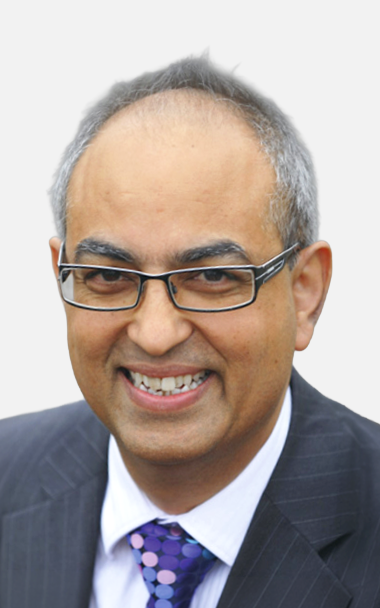
Dr. Raman Uberoi
will be awarded at
the CIRSE 2026 Opening and Awards Ceremony September 5, 14:30-16:00
Dr. Raman Uberoi
will be awarded at
the CIRSE 2026 Opening and Awards Ceremony
Dr. Raman Uberoi
will be awarded at
the CIRSE 2026 Opening and Awards Ceremony
Dr. Raman Uberoi
will be awarded at
the CIRSE 2026 Opening and Awards Ceremony
Raman Uberoi, BMSCpath, MBBchir, MRCP, FRCR, EBIR, is a consultant interventional radiologist at the John Radcliffe Hospital, Oxford. He graduated from Cambridge University in 1985 and has been working as an interventional consultant for over 30 years. He was the clinical lead and clinical director in the Oxford University Hospitals and helped develop several interventional services such as endovascular repair of aortic aneurysms (EVAR), complex fenestrated and arch branch stent grafting programs, gastrointestinal stenting, fibroid embolization, pulmonary artery thrombolysis, distal venous arterialisations, venous interventions including pelvic congestion syndrome.
Dr. Uberoi is passionate about improving outcomes and quality of care by making IR a more clinically focused specialty through research and publication of quality standards. He has authored multiple book chapters, over 190 articles in scientific journals as well as national and international standards guidance for the BSIR, Royal College of Radiologists, CIRSE, and NICE. He continues to work as deputy editor for CVIR and senior editor for Clinical Radiology and British Journal of Radiology.
Dr. Uberoi has held many national and international leadership posts, including chairing many BSIR committees and President of the BSIR. He was elected to treasurer and president of the radiology section of the Royal Society of Medicine. He has served as the chairperson of the Royal College of Radiologists’ regional leads, as well as on its ISAS accreditation board, its professional standards board, its faculty boards, and as senior RCR officer as medical director of professional practice. Within CIRSE, Dr. Uberoi has served as Chairperson of the Standards of Practice Committee, Chairperson of the Membership Committee, twice as a member of the CIRSE Annual Congress Scientific Programme Committee, as a member of the IDEAS Scientific Programme Committee, twice as Chairperson of the IR Curriculum Review Taskforce, and as a member of the Membership and Rules Committee. One of Dr. Uberoi’s biggest achievements has been the development and evolution of the EBIR through many roles for over 15 years, including as Chairperson of the EBIR Board.
Dr. Uberoi has been awarded honorary membership by IRSA and the Irish Interventional Society Medal. He has been made Graham Plant Professor jointly by the RCR and BSIR and received the BSIR Gold Medal in 2023. He delivered the CIRSE Gruentzig lecture in 2023 and Wattie Fletcher Lecture in 2025. However, Dr. Uberoi considers his proudest achievements his 37-year marriage to Susan Uberoi, his two sons Adam and Jamie, and his grandson Rafael.